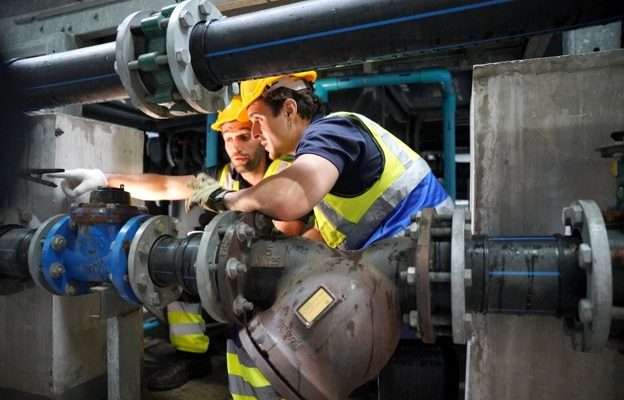
When a pipe fails, the immediate question is often whether the line must be shut down and replaced or whether a tested repair system can restore integrity more quickly.
In some applications, composite repair systems can provide a fast, cold-applied alternative to welding or full section replacement, provided the repair is suitable for the defect, pipe material and operating conditions.
Understanding how emergency pipe repair works helps reliability and maintenance teams make a more informed decision when downtime, safety and production continuity are all under pressure.
Why Full Replacement Is Not Always The Right First Move
A pipe failure understandably raises questions about the condition of the wider system, but immediate section replacement is not always the only option.
Composite repair systems can provide a structural, pressure-rated repair where the product and repair design are suitable for the defect, pipe material and service conditions. Depending on the application, this can avoid hot work, welding or immediate section replacement.
A&S International positions Sylmasta pipe repair systems as independently tested solutions for industrial pipe and pipeline repair, including permanent live-leak repair and corrosion protection.
What Composite Repair Involves
Composite pipe repair typically involves preparing the damaged area, rebuilding or sealing the defect where necessary, and applying a resin-based composite wrap around the pipe to reinforce the repaired section.
The exact repair method depends on the defect and service conditions. Sylmasta systems, for example, may combine epoxy putty or sealing material with a SylWrap HD composite pipe repair bandage to seal the defect and reinforce the surrounding pipe.
SylWrap HD uses a water-activated resin which cures to form a hard, impact-resistant reinforcement layer around the repaired section.
Where Composite Repair Can Be Used
The suitability of an emergency pipe repair system depends on the specific product being used.
SylWrap HD is designed for use on materials including steel, copper, malleable iron, GRP, ceramic, clay and many plastics. Other Sylmasta repair kits extend that range to substrates including stainless steel, concrete, lead and rubber.
This flexibility is useful in industrial pipe leak repair because sites often contain pipework made from several different materials rather than a single standard substrate.
The important point is to confirm that the exact repair product is suitable for the pipe material and defect rather than assuming every composite wrap can be used in every application.
Why Testing And Rating Matter More Than The Product Name
For a repair to perform as intended, the system needs to be suitable for the pipe’s operating pressure, temperature, contents and defect type.
Sylmasta has independently tested specific SylWrap repair configurations against recognised ASME PCC-2 requirements.
One ASME PCC-2 401-III qualification test involved a SylWrap HD structural repair that exceeded 309.6 bar during testing. A separate ASME PCC-2 402-III leak-repair qualification tested a leaking-component repair through pressure cycles of up to 30 bar.
These figures should not be treated as universal ratings for every Sylmasta repair. They demonstrate why the exact product, repair configuration and operating conditions need to be checked before a repair is selected.
What To Check Before Choosing An Emergency Repair System
Before selecting an emergency pipe repair system, maintenance teams should consider:
- Is the repair system suitable for the actual operating pressure?
- Is it rated for the temperature the pipe reaches in service?
- Is it compatible with the fluid or chemical being carried?
- Is the product suitable for the pipe material?
- Does the repair method match the defect type and size?
- Has the relevant repair configuration been tested to an appropriate standard?
If pressure, temperature, chemical compatibility or substrate are not assessed properly, there is a greater risk that the repair will not perform as intended.
A Tested Range For Industrial Applications
A&S International distributes Sylmasta, whose range includes composite wraps, epoxy repair materials and live-leak repair kits.
The SylWrap Universal Pipe Repair Kit is designed for burst or leaking pipes and can be used in selected applications where the line cannot immediately be isolated. The latest safer-resin formulation has a maximum service temperature of 120°C, so the suitability of the repair must be checked against the actual pressure, temperature, defect and product configuration.
Sylmasta is also introducing a new low-diisocyanate resin formulation across the range. Sylmasta states that the formulation contains sufficiently low levels of free diisocyanate that the mandatory EU diisocyanate training requirement does not apply, helping simplify use for professional maintenance teams while retaining the structural repair principle of the existing SylWrap system.
Sylmasta describes the formulation as a patent-pending development and a key safety differentiator within the pipe repair wrap market.
Sylmasta also offers Pipe Repair Contractor Cases designed for organisations that need to keep multiple emergency repairs available on site. These kits combine sealing and reinforcement materials and are used in sectors including water treatment, petrochemicals and offshore operations.
Emergency Repair Or Long-Term Repair?
Not every emergency pipe repair is simply a temporary bridge to replacement.
Depending on the system, defect and service conditions, a composite repair may serve as either an emergency containment measure or a long-term structural repair. The decision should be based on the product’s tested capabilities and the engineering requirements of the pipe.
Sylmasta describes a number of its SylWrap systems as permanent repairs, including live-leak applications. At the same time, the fact that one product is suitable for a permanent repair in one application does not mean the same repair approach is appropriate for every defect.
This is why product selection should be driven by the actual operating conditions rather than by the need to restore the line as quickly as possible.
Preparing Before A Pipe Failure Happens
The most effective time to consider emergency pipe repair is before an unplanned failure occurs.
Keeping an appropriate, tested repair system on site can reduce the time spent researching options during an incident. Sylmasta’s Contractor Cases are specifically designed to keep repair materials available for multiple leaks, allowing maintenance teams to select the appropriate kit when a defect is identified.
That preparation should include understanding which pipe materials, pressures, temperatures and fluids the available repair systems are suitable for.
Get The Right Repair For The Application
A pipe failure does not always require immediate section replacement, but the repair method still needs to match the defect and service conditions.
Contact A&S International to discuss Sylmasta emergency pipe repair systems and identify which repair options are suitable for your pipe material, defect and operating conditions.
Image Source: Envato