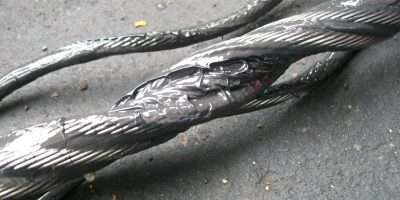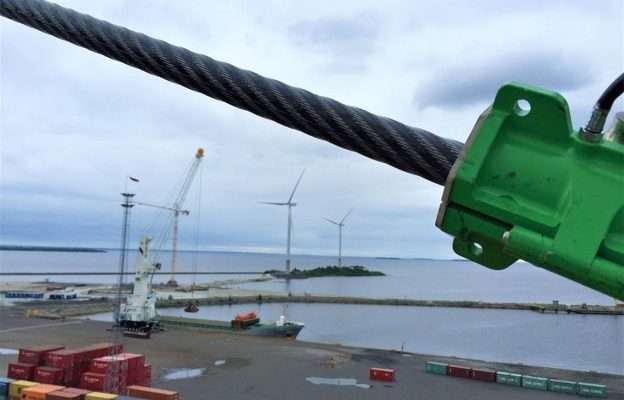
Constant salt spray, immersion, high humidity and temperature cycling accelerate corrosion through wire rope internal structure and external surface far faster than land-based equivalents ever experience. In offshore and marine applications, inadequate lubrication not only impacts your maintenance programme, but it’s also a safety and regulatory issue, and treating it as anything less is a genuine risk.
Salt spray and high winds are just some of the conditions that make marine and offshore environments so demanding on equipment. Yet these are exactly the conditions that make using a robust wire rope lubricant non-negotiable. A wire rope that might last comfortably for years on land can deteriorate at a fraction of that rate once exposed to constant salt water and temperature swings. For crane and lifting equipment on vessels, ports and offshore platforms, that accelerated wear adversely impacts replacement schedules, maintenance budgets and, ultimately, operational availability.
The Regulatory Picture You Cannot Ignore
The US Vessel General Permit (VGP) requires environmentally acceptable lubricants (EALs) at all oil to sea interfaces on vessels operating in US waters, setting a clear regulatory baseline for marine lubrication. EU Oslo and Paris (OSPAR) conventions, which govern the protection of marine life in the North Atlantic, and UK Marine Management Organisation (MMO) guidelines impose broadly equivalent principles, which means non-compliant lubricants at wire rope interfaces with sea water discharge create direct regulatory exposure regardless of which jurisdiction your vessel or port operations fall under.
Independent industry explanation of VGP requirements from a major lubricant manufacturer’s compliance perspective sets out exactly what qualifies as an EAL under these frameworks. Clear guidance on EAL requirements traces how the regulatory language shifted from should in 2008 to must in 2013, reflecting how seriously this area is now treated.
A Lubricant Built For The Environment It Operates In
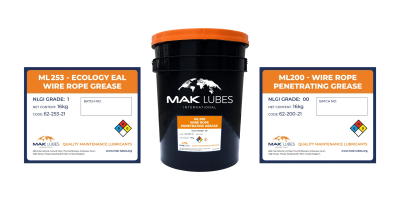
MAK LUBES ML253 Ecology EAL uses natural and synthetic ester base oils to deliver VGP-compliant biodegradable protection, combined with extreme pressure performance, water resistance and salt corrosion inhibition suited specifically to marine wire rope applications. It isn’t a general purpose grease adapted for marine use but is instead formulated for exactly this environment from the outset. That distinction matters in practice, since a grease that performs well on land can behave very differently once exposed to constant salt water, humidity and the kind of pressure loading typical of cranes and lifting wire ropes at sea.
What Proper Lubrication Actually Achieves
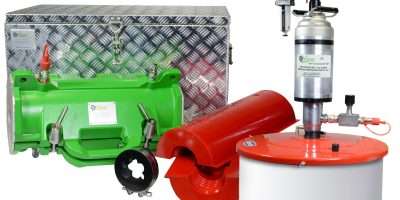
The results from systematic crane wire rope lubricant programmes are substantial. A documented ship lifter case study recorded lubrication time reduced from 320 hours to just 32 hours per cycle, and a 90% labour reduction, while still achieving full core penetration via the Viper Wire Rope Lubricator range – something manual methods simply cannot replicate in marine conditions.
That reduction in lubrication time is not just a labour saving either. Less time spent on lubrication generally means less time the equipment is out of service for maintenance, which on an offshore platform or working port can translate into meaningful operational availability gained back over a year.
The financial case is just as compelling. Replacement costs in offshore and port applications are amplified by mobilisation, working at height over water and downtime that halts operations entirely while repairs take place. Operations report up to 300% wire rope life extension through systematic lubrication programmes, directly reducing how often replacement is needed in the first place.
Matching The Right Product To The Right Risk
Not every application within a marine or offshore site needs the same level of environmental formulation. A&S International offers Viper Wire Rope Lubricators (Mini, Mid & Maxi) covering 6-to-165-millimetre rope diameters, ML253 Ecology EAL for VGP compliant protection where it is required, and ML200 Penetrating Grease for core saturation where EAL formulation is not specifically needed.
Getting this match right avoids both unnecessary cost and unnecessary regulatory exposure. A site running a mix of vessel-based and shore-based lifting equipment, for example, may need both products in its maintenance store rather than standardising on just one across the board.
Protecting Assets And Meeting Obligations At The Same Time
Offshore and marine wire rope applications sit at the intersection of two pressures that do not always pull in the same direction, maximum corrosion protection and strict environmental compliance. The products covering this gap need to do both convincingly, not just one or the other, which is precisely where ML253 Ecology EAL and the Viper Wire Rope Lubricator range together earn their place. Treating these as a single combined requirement, rather than two separate procurement decisions, tends to produce a more coherent maintenance programme overall.
Marine and offshore wire rope lubricant applications demand both maximum corrosion protection and VGP compliant, environmentally acceptable lubricants.
Contact A&S International to discuss Viper Wire Rope Lubricators and MAK LUBES ML253 Ecology EAL for your vessel, port or offshore crane maintenance programme, and put a lubrication regime in place that protects both your equipment and your compliance position.