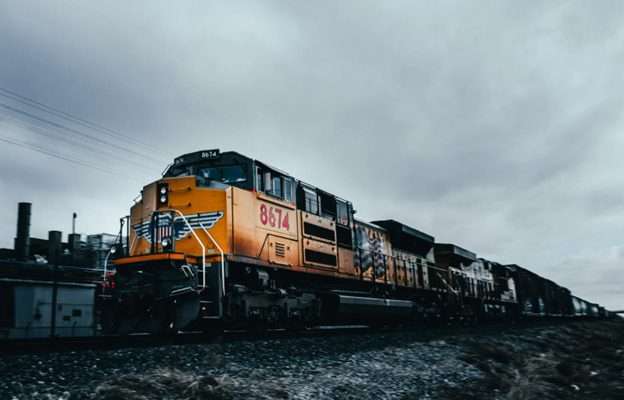
If you manage a rail freight fleet, you can probably already feel the pressure mounting — you’re expected to reduce rail emissions, report on ESG performance, cut fuel costs and improve environmental impact, all while keeping locomotives moving and margins intact. Yet every day pressures can make it hard to deliver all this as you navigate tight schedules, fixed routes and legacy assets.
The obvious solution to reduce emissions would be electrification or hydrogen conversion, then you get rid of diesel in one hit. But in reality, replacing an entire diesel fleet involves enormous capital expenditure, infrastructure upgrades and years of operational planning.
So, what can you do now that will offer significant immediate benefits?
Increasingly, rail operators are turning to diesel fuel conditioners as a practical, low-capex route to measurable emissions reduction. They don’t require you to pause operations, retrain engineering teams or alter maintenance frameworks. Instead, they work within your existing fuel management processes. Bulk tank dosing at depot level integrates into your standard refuelling routines, meaning you can reduce emissions across your entire fleet without operational disruption.
When combined with measurable trial data, such as reductions in particulate matter and improved fuel efficiency, you’re not just relying on theory. You’re implementing a solution that fits the realities of rail freight operations today.
The Challenge With Fleet Replacement
Transitioning to electric or hydrogen locomotives isn’t just about buying new rolling stock. You’re also looking at:
- Infrastructure modifications
- Charging or hydrogen supply networks
- Depot upgrades
- Long procurement cycles
- Operational disruption
For many freight operators, that simply isn’t viable in the short to medium term. Yet your emissions reporting obligations don’t pause while you wait for infrastructure to catch up. That’s where fuel conditioning offers a pragmatic alternative.
How Sulnox Eco Conditioner Works?
Sulnox Eco Fuel Conditioner is designed to improve combustion efficiency in existing diesel engines. It’s an all-organic blend of surfactants that enable emulsification and secondary atomisation, improving combustion efficiency.
When combustion improves, you see:
- Particulate matter (PM2.5 and PM10)
- Lower CO₂ emissions
- Reduced NOx emissions
- Improved fuel efficiency
Independent generator trials conducted by Socotec demonstrated more than 96% reduction in particulate matter, 26.7% CO₂ reduction and 14% NOx reduction. In rail-specific trials, Colas Rail UK tested Sulnox Eco Fuel Conditioner on Class 66 locomotives. The results showed a 32.6% reduction in PM2.5 and a 30.4% reduction in PM10. It also showed 4.5% improvements in fuel efficiency. In essence it means significant emissions reduction without having to touch your fleet hardware.
Immediate Implementation, Zero Capex
Unlike major retrofits or new vehicle procurement, fuel conditioners can be introduced immediately. Sulnox Eco Fuel Conditioner is dosed at a 1:2,000 ratio directly into bulk diesel storage tanks. There’s no need for engine modification, no downtime for installation and no costly infrastructure overhaul. It’s compatible with EN590 diesel, biodiesel and HVO, making it suitable across mixed fleets. And it enables you to improve your rolling stock’s environmental profile without taking assets offline.
Fuel Savings And Operational Benefits
Reducing rail emissions is one objective. Reducing operating costs is another.
Improved combustion typically translates into fuel savings with real-world trials demonstrating:
- An average of 5% fuel savings in marine applications
- An average of 8% savings in land-based fleets
- 5.74% average savings in one demolition fleet trial
Beyond fuel consumption, operators also report:
- Reduced AdBlue usage
- Fewer DPF regeneration cycles
- Lower soot formation
- Reduced carbon deposits
- Extended engine component life
Sulnox improves fuel lubricity by an average of 17%, reducing wear on pumps and injectors, so not only do you see a reduction in emissions — you increase the working life of your assets too.
Supporting ESG And Tender Requirements
If you’re bidding for contracts, environmental performance increasingly influences award decisions. Being able to demonstrate measurable reductions in fleet emissions strengthens your position. Rather than promising future fleet replacement, you can show immediate action and quantifiable improvement. For sustainability and ESG managers, conditioners offer:
- Verifiable particulate reduction
- Lower reported CO₂ emissions
- Tangible fuel efficiency gains
- Minimal operational disruption
It’s a practical step that aligns with Net Zero strategies without destabilising budgets.
A Realistic Path Forward
Fleet replacement remains part of the long-term decarbonisation roadmap but it’s far from the only option. If you’re looking to reduce rail emissions today, not five years from now, fuel conditioning provides a measurable, low-risk intervention. You don’t need to replace a single locomotive to begin improving environmental performance. You can act now, using the assets you already have.
Cut emissions without replacing a single locomotive. Contact A&S International to discuss how Sulnox Eco Fuel Conditioner can transform your fleet’s environmental performance.